Photo album
* AL-Kharabsheh: Green Building Offers a Valuable Opportunity to Reduce Energy Costs and Enhance Building Efficiency
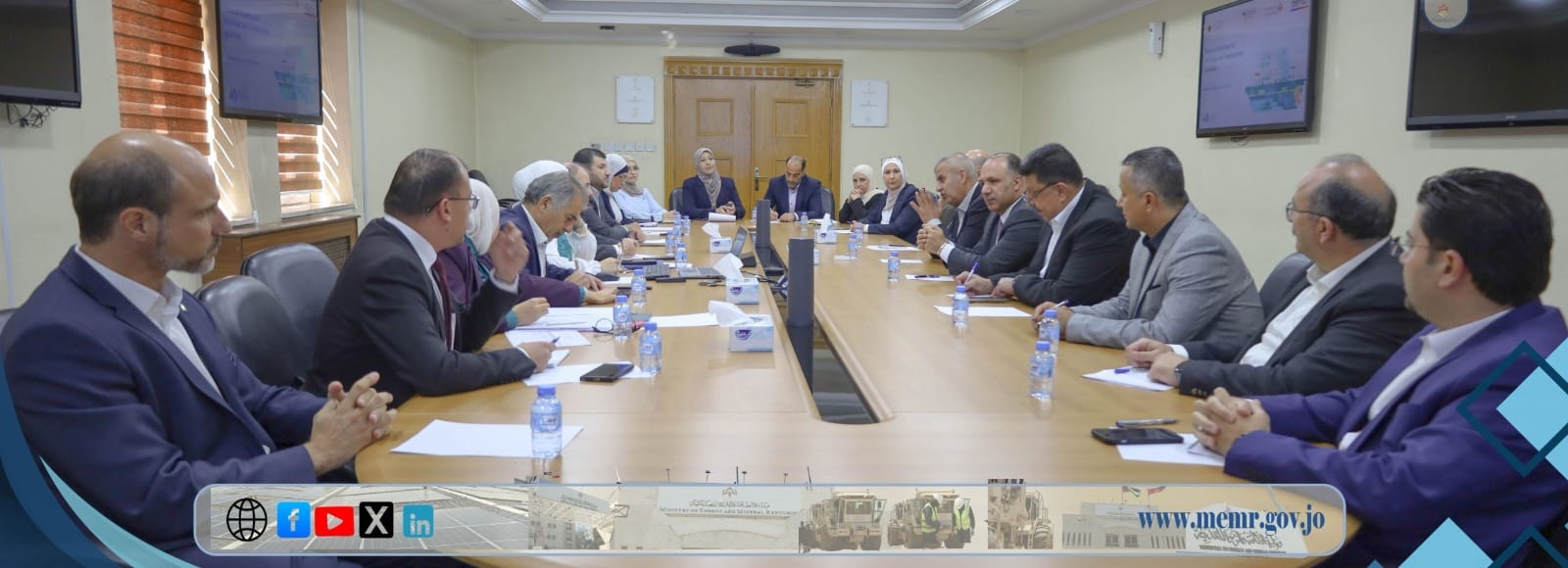
September 14, 2026 – Minister of Energy and Mineral Resources Dr. Saleh AL-Kharabsheh chaired a meeting of the Energy Sector Public-Private Partnership Council today, Monday. The meeting focused on discussing the national roadmap for buildings and construction in Jordan—developed under the Jordanian-German energy partnership in collaboration with the German Energy Agency (DENA)—which aims to reduce emissions from both existing and new buildings.
AL-Kharabsheh stated that green building practices for existing and new structures represent a valuable opportunity to significantly lower energy costs within the building sector. He emphasized that energy efficiency must be an integral part of the planning, design, and implementation phases of building and construction projects.
He explained that while the application of green building codes and specifications is currently voluntary, it could become a mandatory global requirement. This necessitates that Jordan prepare for such standards, particularly within the industrial building sector.
He underscored the importance of the national roadmap in establishing a clear framework for transitioning toward buildings that are more energy-efficient and produce fewer emissions. He also highlighted the need to leverage available opportunities in energy efficiency, renewable energy, and modern technologies, ultimately helping to reduce energy costs and boost the competitiveness of economic sectors.
For her part, Engineer Lina Mobaideen, Director of the Energy Efficiency and Climate Change Directorate, stated that Jordan’s building and construction sector accounts for over 40% of total final energy consumption and more than 60% of electricity usage, making it a major driver of energy consumption and carbon emissions.
She noted that more than 70% of buildings in Jordan were constructed prior to the adoption of energy efficiency codes, presenting significant potential for improvement through the retrofitting of existing structures and the application of relevant codes and specifications to new buildings.
Mobaideen highlighted that the Ministry has launched three national energy efficiency plans—alongside the National Green Growth Plan aimed at emission reductions—and has adopted green building and energy efficiency codes for gradual implementation in government projects and new constructions.
She added that developing a national roadmap is a crucial step toward formulating the policies and implementation frameworks needed to upgrade the building and construction sector, aligning with national goals to create buildings that are more energy-efficient, sustainable, and climate-resilient.
She emphasized that implementing the roadmap requires effective public-private partnerships and the leveraging of investments, modern technologies, and innovative financing models. These efforts will help accelerate energy efficiency and building retrofitting projects while reducing energy costs for citizens and businesses alike.
It was noted that Jordan is moving forward with the development of an integrated system to support the transition toward buildings that are more efficient, sustainable, and resilient to the impacts of climate change, by developing policies and legislation and strengthening partnerships with various stakeholders.
During the meeting, amendments to the 2017 regulations governing the licensing of energy auditing activities were discussed; these amendments aim to streamline the licensing process for Category I and II entities, thereby enabling a larger number of companies to obtain licenses.
The national roadmap aims to catalyze climate action within the building and construction sector and support the Kingdom's transition toward a low-carbon future.